VoidAuth
- Platform
- Docker Linux Web
- Licence
- AGPL-3.0 Open source
- Website
- voidauth.app
- Source code
- github.com/voidauth/voidauth
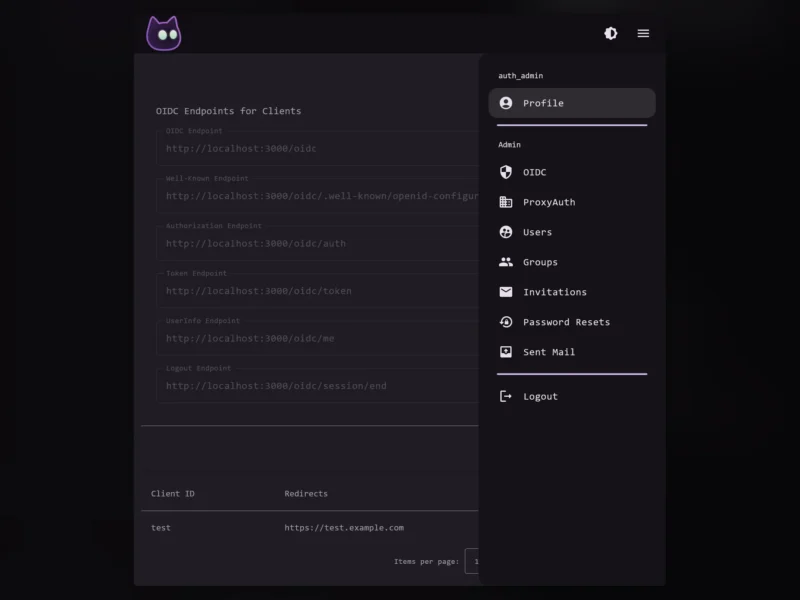
VoidAuth is a single sign-on server you host yourself: it stands in front of the other applications on your network and handles the login, so each one stops carrying its own user table. It speaks OpenID Connect for apps that support SSO natively, Proxy ForwardAuth for the ones that do not, and LDAP for the services that only know how to look up a directory — which covers most of what a homelab or a small company actually runs.
Users, groups and sign-in
Accounts and groups are managed from a web admin panel, with invitations sent by link instead of open sign-up (self-registration can be enabled per deployment). Sign-in can require multi-factor authentication or a passkey, and passkey-only accounts are supported for people who do not want a password at all. Password reset goes through email verification, and the login page itself is themeable — logo, title and accent colour — so the portal does not look like an afterthought next to the apps behind it.
What it speaks
- OpenID Connect — an OIDC provider, with per-app setup guides for the usual self-hosted suspects.
- Proxy ForwardAuth — drop it behind Traefik, Caddy or nginx and gate any HTTP app that cannot do OIDC on its own.
- LDAP — an LDAP directory server for software that expects one.
Deployment and requirements
The published voidauth/voidauth image runs alongside a PostgreSQL database in one Compose file; SQLite is also supported, and data at rest is encrypted either way. Four environment values are required — the public APP_URL, a STORAGE_KEY, and the database host and password. On first start the initial admin account’s password-reset link is printed in the container logs, which is how you claim it; from there users are added through invitations rather than by hand.
Before you trust it with production
VoidAuth is licensed AGPL-3.0 and its own README says plainly that it has not been security-audited and leans on third-party packages for much of its functionality. That is a fair description of a young project with a very small deploy footprint: it is a good fit for a lab, a home network or an internal tool set, and worth a review before it guards anything customer-facing. Being AGPL, any modified version you run as a network service has to have its source offered to users.