Wazo
- Platform
- Self-hosted Linux Docker Web
- Licence
- GPL-3.0 Open source
- Website
- wazo-platform.org/
- Source code
- github.com/wazo-platform/wazo-platform
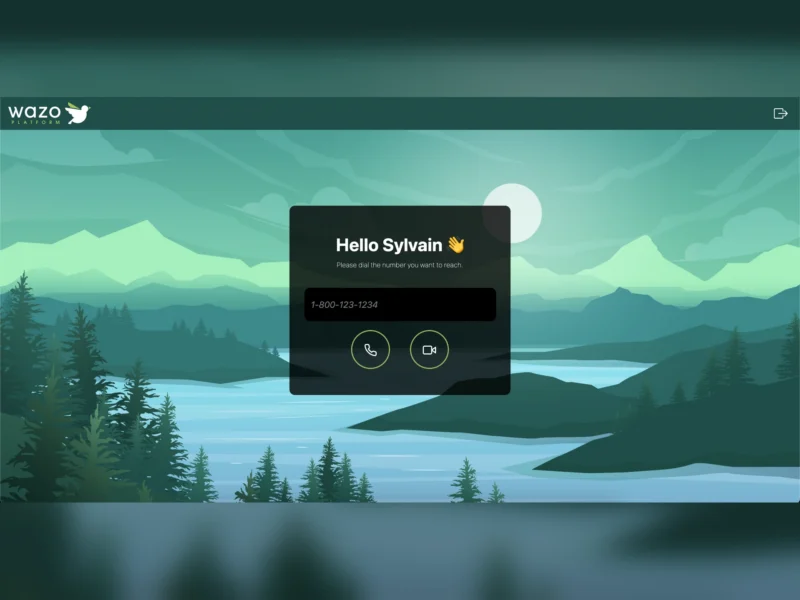
Wazo
Website: wazo-platform.org
Wazo Platform is an open-source platform for building a carrier-grade IP telephony service: class 5 calling, contact-centre queues, conferencing, voicemail and messaging, assembled from microservices behind REST APIs. It is aimed at integrators and service providers who want to run their own telephony infrastructure rather than rent a UCaaS seat. The software is free under GPL-3.0 and installs on your own Debian server; Wazo Communication also sells a commercial white-label version at wazo.io, and that is the paid tier.
What separates it from a plain Asterisk or FreeSWITCH install is the layer above the media engine. Wazo keeps configuration behind APIs and a tenant model, so adding a user, a queue or a SIP trunk is a REST call rather than a file edit, and one deployment can serve several customers. The trade-off is weight: it is a multi-service stack running PostgreSQL, RabbitMQ, nginx, Kamailio and RTPEngine, and you need to be comfortable on a Linux server to operate it.
Key Features
- Class 5 call control: audio and video calls, ring groups, call parking, IVR menus, voicemail and conferences are all driven from the configuration API.
- Contact centre: queues offer linear, least-recent, fewest-calls, round-robin, random, weighted-random and ring-all strategies, with agent login and logout and skill-based routing by weighted rules.
- Native multi-tenancy: requests are scoped to a tenant with the Wazo-Tenant header, and call recordings and configuration are stored per tenant, so a single stack can host separate customers.
- Phone provisioning: wazo-provd configures SIP phones and gateways over DHCP and HTTP with per-vendor plugins; a new handset is provisioned by dialling its provisioning code.
- Meetings: users create a web meeting and share a guest URL; guests join over WebRTC, a meeting is capped at 100 participants, and it is deleted 48 hours after creation.
- Recording and call logs: calls can be recorded on demand with *3 or automatically per user, and the files are indexed in the CDR API alongside the call detail records.
- Open interfaces: each service publishes an OpenAPI-described REST API, with WebSockets for events and webhooks for reactions; the project also ships JavaScript and Python SDKs and a WebRTC demo application.
- Deployment: an all-in-one Debian 12 install is driven by Ansible, with a documented minimum of 2 GiB of RAM for a test server and 4 GiB for about 50 users in production.
Licence
GPL-3.0. You can run, modify and redistribute the software, including commercially, but a modified version you distribute must be published under the same licence with its build and install instructions. That copyleft is what lets providers build their own offer on it, and why Wazo Communication sells its commercial white-label version as a service rather than under a different licence.