Free Software
FOSS Face-Off: Open Source Alternatives to Meta Muse Code and Muse Spark
Meta’s Muse ecosystem — the Muse Code terminal coding harness and the Muse Spark inference model — has become a popular way to build AI agents, wire up REST APIs, and orchestrate full-stack projects. It connects through standard OpenAI and Anthropic client SDKs, runs agent workflows with LangChain, sandboxes command execution with bubblewrap, and integrates […]
FOSS Face-Off: Open Source Grok Bot Alternatives Compared
Grok Bot is xAI’s pitch for a persistent AI teammate — a cloud agent with its own browser, files, and long-running state that keeps working after you walk away. It is polished and increasingly capable, but it is also a proprietary, subscription-gated service that ships without a model picker, keeps your sessions on xAI’s managed […]
FOSS Face-Off: Grok Bot vs Open-Source AI Agents
Why This Comparison Matters Most AI assistants wait for a message, answer it, and stop. xAI’s new Grok Bot is built around a different idea: you create a named AI teammate that gets a persistent cloud computer, signs in to the applications you authorize, remembers how you work, and can keep working while your laptop […]
FreshRSS vs Miniflux vs Tiny Tiny RSS — Best Self-Hosted Feed Reader Compared
RSS is quietly the best way to keep up with the sites you actually care about — no algorithm shuffling your timeline, no endless scroll, just the feeds you chose, in the order you want them. The catch is choosing a reader. If you want to self-host one, three names keep coming up: FreshRSS, Miniflux […]
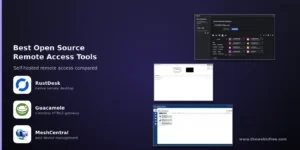
FOSS Face-Off: Best Open Source Remote Access Tools Compared
If you rely on TeamViewer, AnyDesk, or a commercial remote-management suite, you’re paying for something you can run entirely yourself. The open source ecosystem has matured to the point where a self-hosted remote access stack isn’t a compromise — it’s often the better engineering choice. Here we compare three of the best: RustDesk, a fast […]
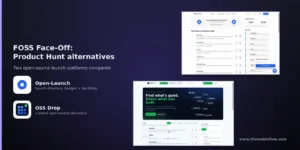
FOSS Face-Off: Open Source Product Hunt Alternatives Compared
Every indie maker has been there: you pour months into a product, then pin all your hopes on a single 24-hour launch window on a big proprietary platform. The algorithm ignores you, your post sinks, and your launch flops. The community has been grumbling for years — one popular IndieHackers thread asking “I’m building a […]

YOURLS vs Shlink vs Kutt — Best Open Source URL Shorteners Compared
URL shorteners are one of those tools everyone uses but almost nobody thinks about. Every link you share on social media, in a newsletter, or in a chat has probably been through one — yet the big commercial shorteners track your clicks, show you ads, and hold your links hostage on their servers. Self-hosting fixes […]
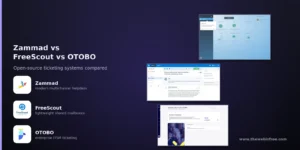
Zammad vs FreeScout vs OTOBO — Best Open Source Ticketing Systems Compared
If you run a small business or an IT team, you will eventually need a way to track support requests — and paying $50+ per agent per month for Zendesk gets old fast. The good news is that the three best open source ticketing systems are completely free, self-hosted, and production-ready. Zammad, FreeScout and OTOBO […]

Plausible vs Matomo vs Umami — Privacy Analytics Compared
If you run a website in 2026, you’ve probably realised that Google Analytics isn’t your only option — and for many site owners, it’s not even the best one. Between privacy regulations, ad-blockers that strip tracking, and a growing awareness that your visitors’ data shouldn’t be the product, the shift toward privacy-focused analytics has become […]
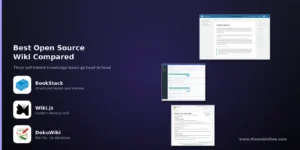
BookStack vs Wiki.js vs DokuWiki — Best Open Source Wiki Compared
Documentation is the backbone of any successful project, yet finding the right tool for the job can feel overwhelming. Do you want something simple that your whole team can use without training? A developer-centric platform with Git-backed storage? Or a battle-tested solution that runs on shared hosting with zero database fuss? Three open-source wiki platforms […]