Nura (formerly postmarketOS)
- Platform
- Android
- Licence
- GPL-3.0 Open source
Description
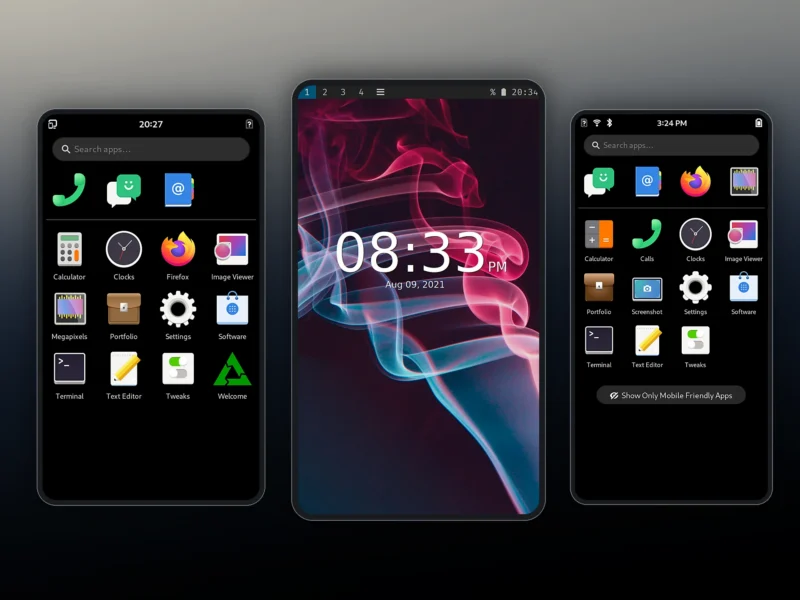
Nura — known until 27 September 2026 as postmarketOS — is a real Linux distribution for phones. Rather than building on Android, it puts Alpine Linux and the mainline Linux kernel on mobile hardware and runs a desktop Linux stack on top, with GNOME, KDE Plasma Mobile, Phosh or Sxmo as the interface. The aim is to give phones the same long-term update story as a PC: a device whose manufacturer stopped caring can keep receiving current software for as long as someone maintains the port. The project is candid that it is not yet an everyday replacement for Android or iOS.
Key Features
- Not Android — a genuine Linux userspace on Alpine, with the mainline kernel wherever the hardware allows it, rather than a vendor fork.
- Four interfaces to choose from — GNOME, KDE Plasma Mobile, Phosh and Sxmo, from touch-friendly to keyboard-and-script driven.
- Long device lifespans — the stated mission is extending the life of consumer electronics and keeping devices useful until they break, not until support ends.
- Community device ports — hardware support lives in pmaports, a large tree of device packages maintained by contributors, so coverage and quality vary by device.
- Regular releases — versioned releases such as v26.06, backed by monthly progress reports and ongoing kernel and UI work.
- Alpine’s packages — the normal Alpine repositories are available, so the software you run on a Linux desktop is usually installable.
- Full control, no surveillance — no walled garden, no upselling, no vendor telemetry; root access and the ability to replace any component.
- Upstream first — kernel, modem and UI changes are contributed back to the projects they come from rather than kept as a private fork.
Why Use Nura?
It is the only option here that is not Android underneath. If you want to know that every layer of your phone is free software you can inspect and replace, and you are willing to accept rough edges — battery life, camera quality and app availability all trail Android — this is the project that delivers it. It is also the most direct answer to planned obsolescence: the OS is maintained independently of the vendor.
Use Cases
- Reusing a phone that no longer receives vendor or Android updates
- Mobile Linux development, testing and porting work
- Privacy maximalists who want no Android compatibility layer at all
- Convergence setups where the phone doubles as a small Linux computer
- Learning how mobile hardware support works on mainline Linux
Supported devices
AArch64, ARMv7 and x86_64 devices, with support provided by community-maintained ports rather than the vendor. The project suggests a second-hand SDM845 or MSM8916 device as a good starting point for people new to Linux on mobile, and recommends checking a specific device’s status before buying.
Related
Compare with LineageOS, GrapheneOS and CalyxOS.
Licence
GPL-3.0 for the project’s own packages, including pmaports, on top of Alpine Linux and the many upstream projects it builds from.