Luanti
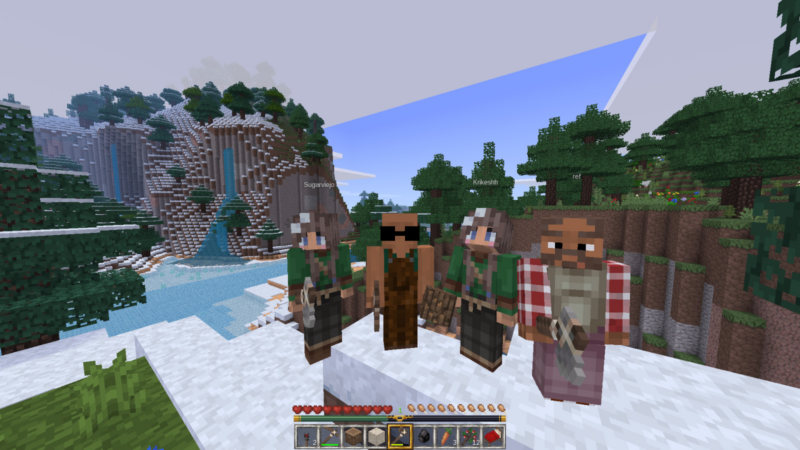
Luanti (formerly Minetest) is a free and open-source voxel game engine and game-creation platform, first released in 2010 and renamed from Minetest to Luanti in 2024. Written in C++ with a Lua scripting layer, it lets you dig, build and explore blocky worlds in the style of Minecraft — or use the same engine to build your own games, mods and multiplayer servers.
Key Features
- Open voxel sandbox — walk, dig and build in procedurally generated block worlds, in single-player or on a public server
- An engine, not a single game — the engine is content-agnostic: you pick a game such as VoxeLibre, Mineclonia or Repixture, or write your own
- ContentDB integration — browse, install and update games, mods and texture packs from inside the game, with no manual file copying
- Lua modding API — blocks, items, mobs, world generation and the HUD can all be changed with Lua, without touching the C++ core
- Built-in server mode — the same binary runs as a dedicated multiplayer server, so a spare PC, home server or small VPS is enough to host a world for friends
- Cross-platform and portable — official builds for Windows, macOS, Linux and Android, and your worlds and settings can be copied between them
- Open world format — maps are stored in an SQLite or LevelDB database you can back up, copy and inspect with normal tools
- Mature and actively developed — first released in 2010, over 13,000 stars on GitHub and a steady release cadence (5.17.0, August 2026)
Why Use Luanti?
Luanti gives you the block-building sandbox experience with none of the commercial strings: no account, no store, no DRM and no in-app purchases. Because the engine is deliberately separated from the games that run on it, one install becomes dozens of different games, and everything you create — worlds, mods, texture packs — is plain data that stays under your control. It is also one of the friendliest on-ramps to game programming: the Lua API means a first mod can be a handful of lines long.
Use Cases
- Building and exploring in a Minecraft-style sandbox without buying a game or signing up for anything
- Running a small multiplayer world for friends or a community on your own hardware
- Learning game development through the Lua modding API, with live in-game reloading while you work
- Classroom and coding-club use — the official site keeps an Education section with material aimed at teachers
- Reviving old or low-power machines, which the 5.17.0 builds still support (Windows 8 and Android 6 or later)
Platform
Windows (8, 8.1, 10, 11) · macOS (12.3 or later, Intel and Apple Silicon) · Linux (Flatpak, Snap, Ubuntu PPA, Arch and other distro packages) · Android 6+
Licence
Free and open source. The engine is released under the GNU Lesser General Public License 2.1 or later (LGPL-2.1-or-later); the textures and sounds shipped with it are licensed CC BY-SA 3.0.
Website
luanti.org — source code at github.com/luanti-org/luanti
Similar Open-Source Games
If you like the idea of an open 3D engine you can build your own worlds with, try Cube 2: Sauerbraten — another free and open-source engine with built-in map editing. You can also browse the Games directory for more free games.
Screenshot: Antimundo via Wikimedia Commons, licensed CC BY-SA 4.0.